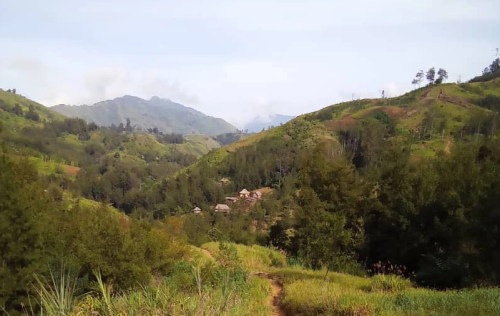
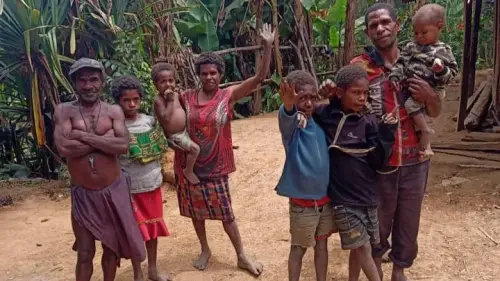
The Kaironk Aid Post provides essential healthcare to a community of up to 10,000 people living in the remote mountain region of the Kaironk Valley in rural Papua New Guinea. For people living in this isolated area, accessing reliable diagnosis, treatment and ongoing healthcare can be extremely difficult. Tuberculosis (TB), one of the world's leading infectious diseases, presents a particular challenge, with limited access to testing and treatment contributing to delayed diagnosis and poor health outcomes.
Papua New Guinea has one of the highest tuberculosis burdens in the world, with national estimates reporting an annual incidence of more than 400 cases per 100,000 people. Yet national figures do not necessarily reflect the reality of remote communities. In places such as the Kaironk Valley, many cases may never be formally diagnosed or recorded because local facilities lack the equipment and infrastructure required to meet Health Department standards for testing and reporting.
The Kaironk Aid Post is locally run and works in partnership with the Madang Health Department to address these challenges. The project focuses on improving access to TB testing, strengthening the clinic's capacity to provide care, and training community representatives to support better health outcomes across the valley.
However, significant gaps remain.
The aid post needs reliable access to diagnostic equipment and medicines, as well as the infrastructure required to operate safely and consistently. Electricity and water supplies remain limited, communication networks are unreliable, and there is a need for health workers with appropriate training and accommodation. These challenges make it harder for the clinic to provide continuous care and to coordinate effectively with provincial health authorities.
Your support will help address these critical needs by contributing towards:
TB testing equipment and medicine supply lines — helping the aid post improve access to diagnosis and maintain reliable supplies of essential medicines.
Solar power and water infrastructure — providing the basic services needed for a dependable and sustainable healthcare facility.
Training for a TB-competent health worker — strengthening local capacity to diagnose, manage and support patients with tuberculosis.
Medical worker, clinical and patient accommodation — improving the facilities available to health workers and the people they serve.
Communication resources — helping clinic staff, the local committee and villagers maintain contact and coordinate with provincial health authorities.
Every contribution helps strengthen the ability of the Kaironk Aid Post to serve its community reliably and sustainably.
Funds raised for this campaign are sent directly to the Kaironk Aid Post and overseen by the local committee. This local oversight helps ensure that funds are directed towards the practical needs identified by the people working at and relying on the aid post.
Why this matters
The scale of tuberculosis in Papua New Guinea is well documented, including through the World Health Organization's country data. However, national statistics can conceal the challenges faced by remote communities.
TB data and treatment figures are heavily influenced by where diagnostic facilities, reporting systems and medicines are available. In urban and regional centres, people are more likely to have access to testing and treatment and their cases are therefore more likely to appear in official statistics. In remote areas such as the Kaironk Valley, people may face significant barriers simply reaching a facility capable of diagnosing and recording TB.
This means that the absence of recorded cases should not necessarily be interpreted as an absence of disease.
Strengthening the Kaironk Aid Post is therefore about more than treating individual patients. It is about building the local capacity, infrastructure and connections needed for a remote community to access healthcare when it needs it.
Your support can help make that possible.
 Story