The Kaironk Aid Post: Essential Healthcare in Remote PNG
In the remote Kaironk Valley of Papua New Guinea, a small community health facility is serving around 10,000 people, while facing an urgent and ongoing shortage of medicines and medical supplies.
·
10 min read
A remote community with limited access to healthcare
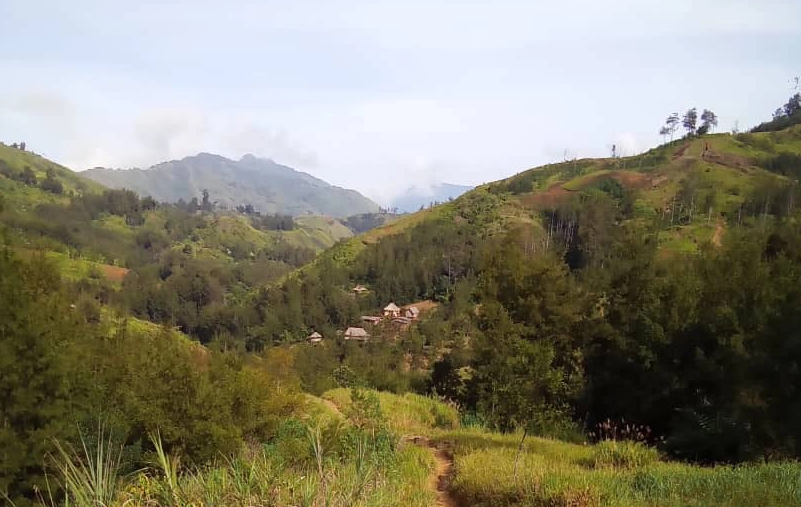
Kaironk is home to the Kalam people and lies in the Bismarck-Schrader Ranges in the far north-east of the Western Highlands of Papua New Guinea. The area forms part of the Middle Ramu District and is administered from Madang, the provincial capital. It is also within the Anglican Aipo Rongo Diocese.
For the people of Kaironk, Womk, Pugoy and the surrounding communities, access to medical care is extremely difficult.
The Kaironk Aid Post (KAP) is currently the only medical service available locally to a population of approximately 10,000 people. Government and NGO medical services in remote areas are extremely limited, leaving communities such as Kaironk particularly vulnerable when illness strikes.
For many residents, reaching a larger medical facility is simply not realistic. The nearest functioning medical facilities are in Madang and Mount Hagen. Depending on circumstances, reaching them can involve an expensive flight or a physically demanding journey of several days on foot.
The vast majority of people who need treatment are neither well enough nor physically able to walk that far and do not have the economic capacity to fly.
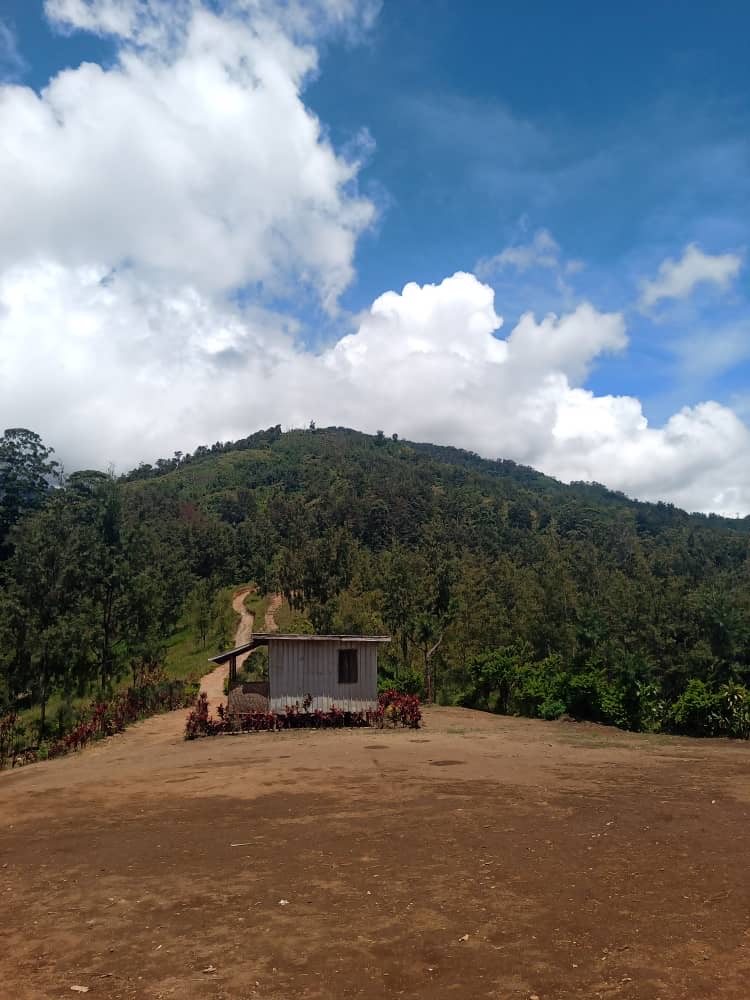
The Kaironk Aid Post clinic building
“Nil stock”: the reality facing the aid post
Paulus Tinagunt has been the Government Health Extension Worker in Kaironk since 2018. His role is vital to the community, but he faces a fundamental problem: there are often no medicines or basic medical supplies available for him to provide.
After spending six weeks in Madang attempting to obtain basic medical supplies for the Kaironk Aid Post, Paulus returned without the resources he needed.
His message to a mother captures the situation starkly:
Mother, mother, there is nil stock, nil stock.
— Paulus Tinagunt, Government Health Extension Worker —
In a 2021 report to the Provincial Health Authority in Madang, Paulus highlighted the severe shortage of medicines and the fact that aid posts across the region were receiving little or no supply from the provincial health authorities. As a result, many were no longer functioning.
According to local reports, conditions have deteriorated further since then.
A history of healthcare challenges
The current crisis has its roots in a much longer history.
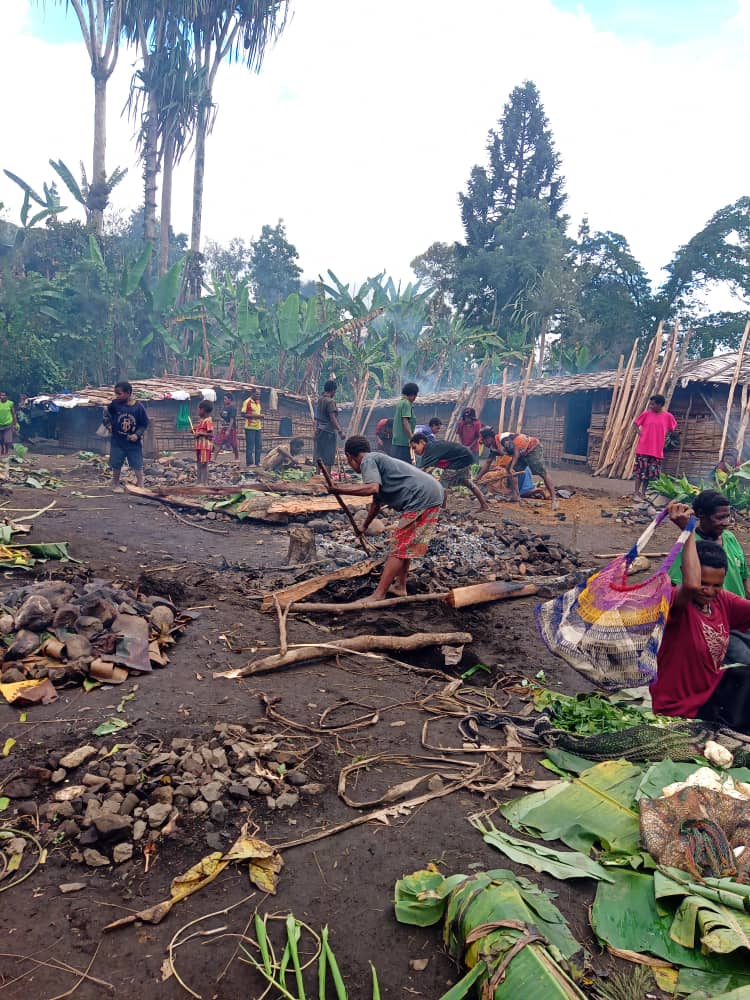
Cooking for the community
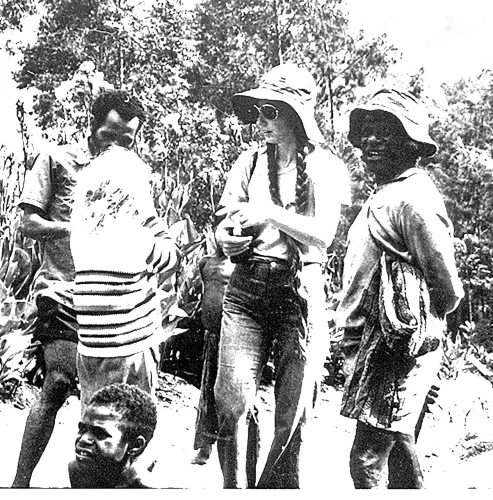
Inge Riebe, who first visited Kaironk in 1965 and continued visiting until 1979, has maintained regular contact with the community ever since.
She describes how diseases introduced during the colonial period had a devastating impact on local communities. Influenza caused many deaths, while malaria was later introduced from the coast and also resulted in significant loss of life.
During the 1960s, the Anglican Church established its regional headquarters at the local patrol post at Simbai. A health service was developed, supported by dedicated nurses, and for many years provided an important source of medical care for people in the region.
That service came to an end in 2009 when the Anglican Church moved its headquarters elsewhere. Government services were unable to adequately replace the healthcare provision that had been lost.
The result has been a growing gap between the medical needs of remote communities and the services available to meet them.
The impact of COVID-19
When COVID-19 began seriously affecting Papua New Guinea from 2021 onwards, the challenges facing Kaironk became even more acute.
Government COVID-19 support was concentrated largely in urban areas, leaving remote communities with little access to vaccination, protective equipment, testing or public-health resources.
There was no widespread supply of masks or hand sanitiser in the Kaironk Valley, and access to COVID-related medical treatment was extremely limited.
In response, the Kaironk Aid Post Committee (KAPC) worked with its community and neighbouring projects to establish a local COVID-19 education and vaccination programme.
With funding received in 2022 from the Papua New Guinea Church Partnership, a small UK charity, the community was able to support construction of a new aid-post building and begin its COVID-19 programme.
The new Kaironk Aid Post and the road were completed in late 2022.
Since then, the community has continued to take responsibility for maintaining both.
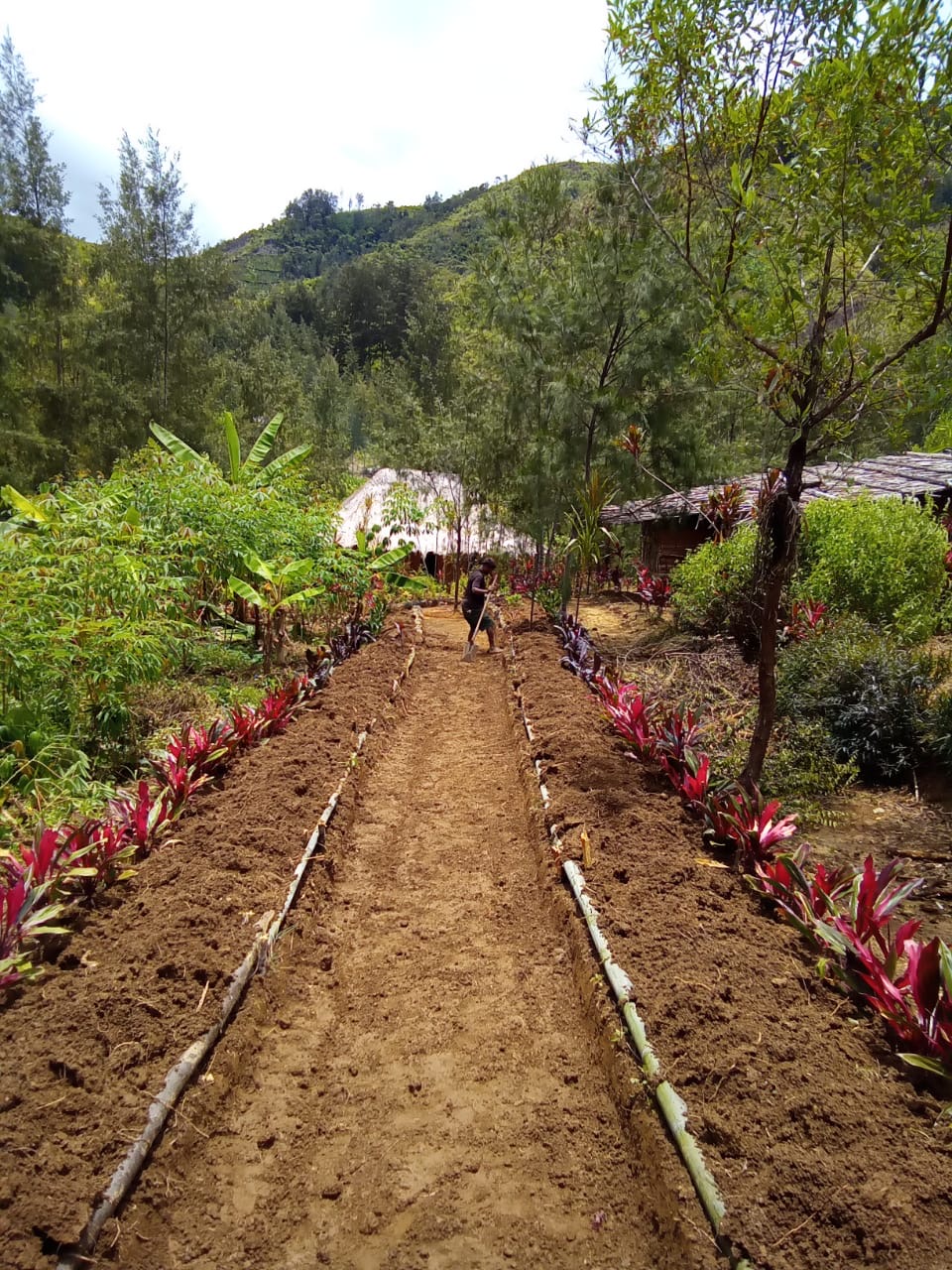
Community members work together to build pathways to the aid post
A community taking action
The Kaironk community holds weekly “Clearing Days”, working together to maintain the road and the aid post. This is particularly important in an environment where vegetation grows rapidly and heavy rains can quickly damage roads and access routes.
The community's involvement demonstrates how much can be achieved locally despite extremely limited resources.
The KAPC's COVID-19 programme also reached beyond the aid post itself. Workers travelled into surrounding villages to provide information about COVID-19 safety, conduct testing, administer vaccinations and distribute masks and hand sanitiser.
The programme was carried out in conjunction with a neighbouring project to the west, helping the available resources reach as many people as possible.
A new and urgent crisis: tuberculosis
While working on COVID-19 prevention and treatment, the Kaironk Aid Post Committee became increasingly aware of another serious health crisis affecting the community: tuberculosis (TB).
People were becoming seriously ill and dying from TB, but there was little capacity for community education, testing or treatment.
There was no established community-based system for TB testing and, critically, no reliable supply of TB medicines.
The greatest problem we face in dealing with this serious epidemic is the lack of TB medicine in PNG
For those few people who have been able to travel to Madang for diagnosis and treatment, the outcome has sometimes depended on whether they could obtain and complete the full course of medication.
Two people from the area who were able to obtain the complete six-month course have recovered. Others have not been so fortunate. Some arrived for treatment when the disease was already too advanced, while others were unable to access enough medicine to complete the required course and subsequently died.
There have also been deaths from TB among community members living in Madang and Port Moresby. These experiences highlight the importance not only of access to medicine, but also of early diagnosis and effective community education.
The challenge of completing TB treatment
TB treatment requires a sustained course of medication. Interrupting treatment because medicines are unavailable can have devastating consequences for individuals and communities.
According to the Kaironk Aid Post Committee, shortages are not confined to remote villages. Even in larger centres such as Madang and Mount Hagen, there have been serious shortages of TB medicines.
In some cases, people diagnosed with TB have reportedly received only part of the treatment required before being told that no further medication was available.
For a remote community such as Kaironk, the situation is particularly difficult. There is currently no expectation that the Middle Ramu Health Department will be able to provide regular TB testing or medicines to remote rural areas such as the Kaironk Valley.
Building local capacity
The Kaironk Aid Post Committee is working to develop local capacity to respond to the TB crisis.
One current aim is to work with the health department to have a Kalam community member with a basic health qualification receive additional training for TB clinic work.
Developing local skills would mean that people in the Kaironk Valley could receive more timely information, support and care without having to make an arduous journey to a distant town.
But training alone cannot solve the problem.
The most immediate challenge remains access to essential medicines.
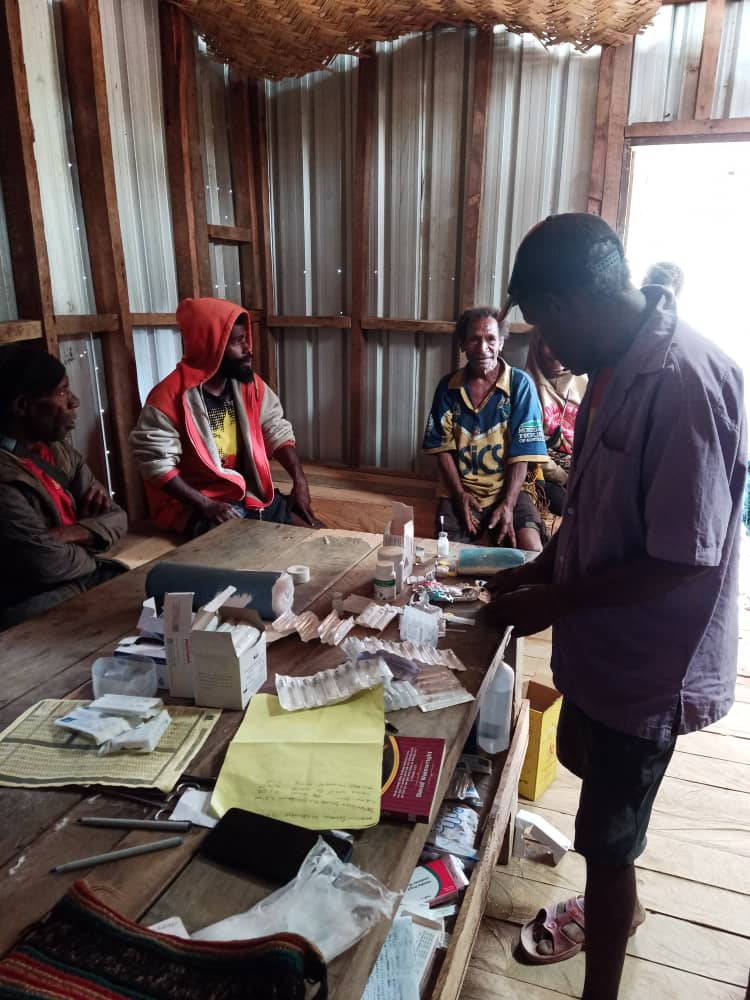
Medicines used for treatment at the Kaironk Aid Post
Keeping the Kaironk Aid Post supplied
The Kaironk Aid Post is recognised as a government-authorised health facility, and its Health Extension Worker, Paulus Tinagunt, is employed in a government-funded position.
Despite this, obtaining medical supplies through government channels remains extremely difficult.
The provincial health system itself faces shortages, meaning that there is often little or nothing available to send to remote aid posts. There is also limited capacity to purchase medicines and medical supplies locally in Madang or Mount Hagen.
This is why outside assistance is so important.
The Kaironk Aid Post currently has an urgent and ongoing need for appropriate medical supplies and medicines.
A practical supply chain
There is a pathway for donated medicines and medical supplies to reach Kaironk.
Judith Demie, from the Department of Health in Madang, is legally able to receive donated medicines and medical supplies through customs on behalf of the project.
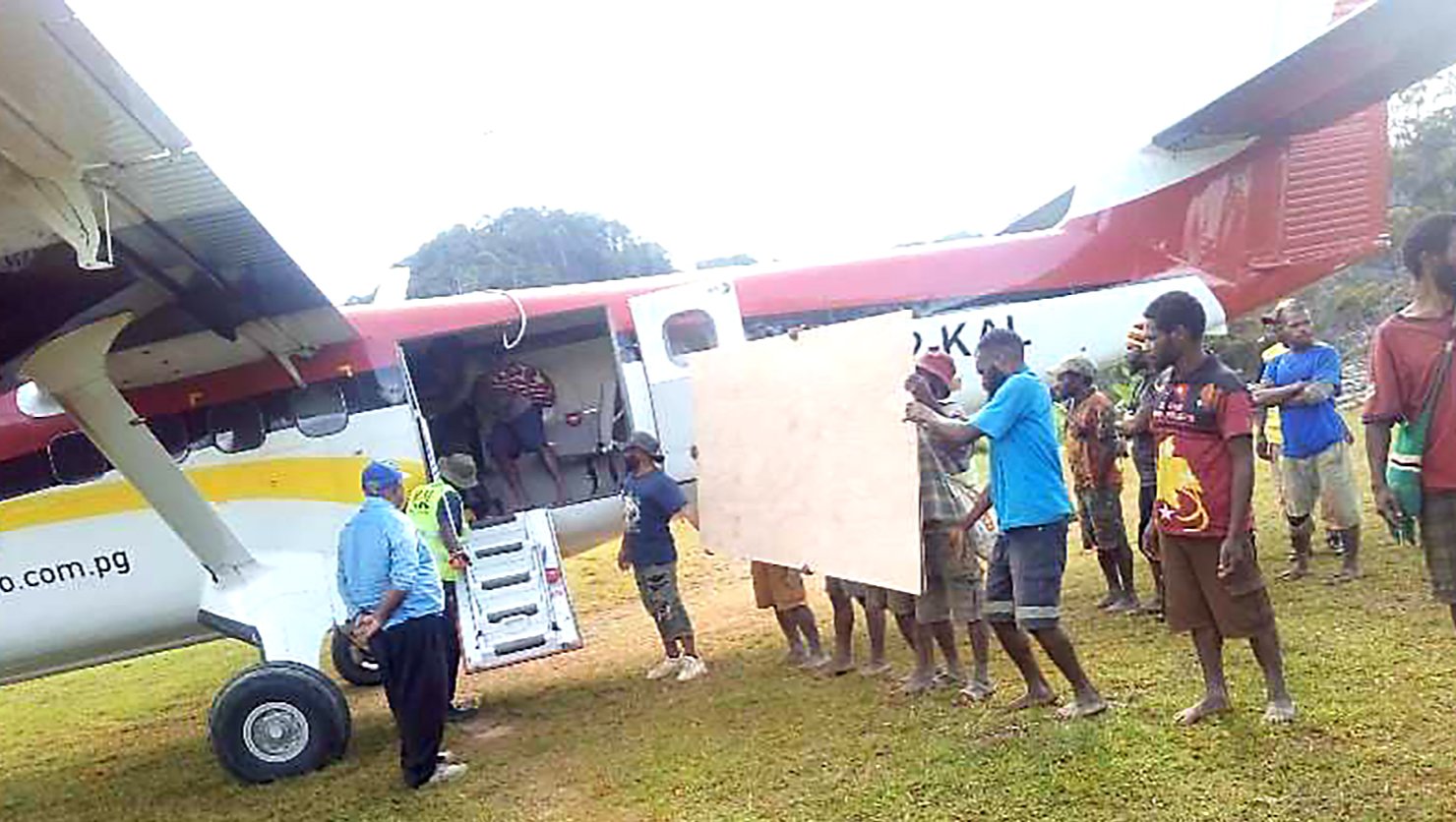
Once supplies arrive in Madang and are cleared appropriately, they can be transported by air to Simbai, the nearest airport to Kaironk. The Kaironk community can then coordinate their collection and transport onwards to the Kaironk Aid Post.
This supply chain is vital because the distance and terrain make conventional access extremely difficult.
How you can help
The Kaironk Aid Post exists because the community has worked hard to establish and maintain it. The new facility, the road, the COVID-19 programme and the ongoing community work have all required local commitment and outside support.
The next challenge is ensuring that the facility has the medicines and medical supplies needed to serve the people who depend upon it.
Support can help the Kaironk Aid Post continue its work in several areas, including:
Essential medical supplies
Appropriate medicines
TB education and community awareness
TB testing and treatment capacity
Training for local health workers
COVID-19 and wider community health education
Maintaining access roads and the aid-post facilities
For a community of around 10,000 people with few alternatives for healthcare, the Kaironk Aid Post is more than a building. It is a vital point of contact between the community and the healthcare system.
Our only hope currently is that we can source medicines from overseas through the kindness of donors
Supporting healthcare in the Kaironk Valley
The Kaironk Aid Post Committee is continuing to work with the local community, health authorities and partners to improve access to healthcare in the Kaironk Valley.
The need is ongoing, particularly for medicines and supplies required to address the current TB crisis.
Donations are warmly welcomed. Every donation helps provide the Kaironk community with essential medicines, medical supplies and training for local health workers, helping to strengthen access to healthcare for people living in this remote region of Papua New Guinea.
Support the Kaironk Aid Post
Help provide essential medical supplies and support healthcare for remote communities in the Kaironk Valley of Papua New Guinea.
Subscribe to receive news, stories and updates via our occasional newsletters, delivered straight to your inbox.
We use analytics to improve this website
We use Google Analytics to understand how people use the site,
such as which pages and articles are viewed. We don't send your
name, email address, or other account information to Google.
 Story